You're reviewing an apartment building's utility setup before buying new meters. The owner gets the main utility bill, and you want to measure each unit's use. Check what the equipment measures. Then check whether you can charge residents from those readings. A submeter helps answer the first. The account setup and rules that apply determine what you can do with the results.
What is submetering in an apartment building?
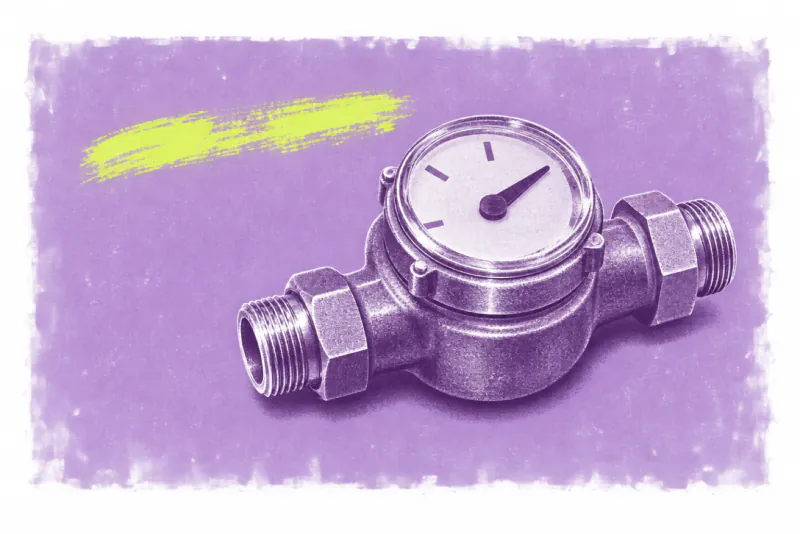
Submetering measures use in part of a property, such as one apartment. That area is served by a main utility meter. The US General Services Administration (GSA) explains that main meters measure an entire building or property. Submeters add detail for smaller areas, systems or equipment.
That can mean measuring an apartment, a shared system or a piece of equipment. GSA's guidance covers electricity, water, natural gas and steam. The word describes measurement. Rules for charging residents depend on the utility type and location.
Monitoring use. You might want to understand a system's use without sending a resident a bill. GSA cautions that a meter itself doesn't save energy. Reviewing its data can lead to action, but installing equipment isn't a savings guarantee.
Before discussing billing, define what you want to measure. A whole-property total and a unit reading answer different questions. Keep that measurement boundary clear when you speak with the utility, an installer or a billing provider.
Who is the utility customer in each setup?
A meter at an apartment doesn't show who holds the utility account. Check both the physical arrangement and the bills. New York's residential electric submetering rules provide an example of how these roles differ.
Master metering. New York defines the master-metered arrangement with the owner or manager as the utility customer. The main utility bill goes to that customer. A building-wide meter doesn't, by itself, show how much each apartment used.
Private submetering. A submeter measures a unit's share behind the main supply. Under New York's rules, the submeterer can hire a service provider to install or read meters and handle billing. Hiring that provider doesn't remove the owner's duties under the rules that apply. A resident statement from the owner or billing provider is distinct from direct utility service.
Direct utility metering. In New York's definition, each residential unit has its own meter. The distribution utility provides it. Confirm the resident's account arrangement with the utility rather than relying on the meter's location or appearance. Our guide to how a resident-held electric account starts covers the move-in handoff.
These differences in accounts and meters don't give you permission to convert a building. Confirm the definitions and obligations that apply where your property is located.
How does a submeter reading become a resident bill?
A reading is the input to a billing process. Where resident billing is allowed, check the reads, calculation and statement against the applicable rules. New York permits a submetering service provider to read meters or handle billing. Texas's apartment electric rule shows why the records behind a charge matter.
Start with the measurement record. Ask the provider to name the meter, unit and period behind each reading. Compare that period with the source utility bill used for the calculation. Keep the source reads available for review, rather than treating the final dollar amount as enough evidence.
Check the charge calculation. Texas requires records of utility bills, cost calculations, submeter readings and tenant billings under its apartment electric rule. Review which use and charges the applicable rule allows. Don't assume every item on the owner's utility bill can be passed through to residents.
Review the statement and support process. Texas requires a submetered electric bill to label itself as “submetered electricity.” Required information can appear on a bill with other items. It must stay separate and distinct from rent. Ask who will explain the readings, correct errors and provide residents with the required records.
For covered Texas properties, the rule requires access to submeter readings and tenant bills. This covers the current month and the 12 preceding months. That recordkeeping rule applies to this covered Texas electric example. Don't treat it as a national rule.
A billing vendor can help carry out these tasks. Before hiring one, confirm who remains responsible for the records, equipment and resident questions under your property's rules.
What rules should owners check before billing?
Check the fuel and covered property type before relying on a rule. Electricity and water can have different treatment within the same state. A meter, lease clause or billing vendor alone doesn't show authority to charge residents.
These selected state examples were checked on November 8, 2026. They don't show permission nationwide or provide a complete compliance checklist. Verify current rules, property-specific orders and local requirements with the regulator, utility and counsel before proceeding.
For assisted housing, check with your program administrator and counsel before changing payment or billing. Ask about rent limits and utility allowances, the amounts set aside for utility costs. This includes housing assisted by the US Department of Housing and Urban Development (HUD). It also includes Low-Income Housing Tax Credit (LIHTC) properties. The Internal Revenue Service (IRS) discusses LIHTC utility allowances for qualifying rent-restricted units. This doesn't mean every assisted property gets the same treatment.
Scroll sideways to see all columns →
| Place and utility type | Covered example | What the official source requires you to check |
|---|---|---|
| New York electricity | Residential electric submetering under Part 96 | Required commission approval must stay in effect. Its conditions and Part 96 duties still apply. A building's specific order matters. |
| Texas electricity | Apartment houses covered by §25.142 | Check the rule's building definition, records and billing protections. The owner pays for common-facility use. The separate rule for splitting central-system costs is discussed below. |
| Massachusetts electricity | Rental-property electric submetering | The Massachusetts Department of Public Utilities (DPU) generally prohibits it. The law has a narrow exception for qualifying computerized heat or air-conditioning monitoring. It must have been installed before July 1, 1997. |
| Massachusetts water | Eligible dwelling units under Chapter 186, §22 | Check all conditions. These include new-tenancy eligibility, certification, fixtures, measurement of only that unit and a written agreement. Specified public-housing developments are excluded. |
| Virginia electricity and natural gas | Covered properties under 20VAC5-305-20, including apartment houses | Owners have duties for equipment. They must also give written notice to the commission and utility. Check lease disclosures and the rest of the chapter too. |
New York and Texas electric examples
New York's Part 96 requires continued authorization by commission order where an order was necessary. Its electric-heat provisions also address petitions and approval when residents become responsible for electricity used for heating. Installing a meter alone doesn't satisfy those requirements.
Texas §25.142 defines an apartment house as more than five dwelling units, including condominiums. Rentals must be nontransient, meaning they aren't for brief stays. They must be on a weekly or longer basis. Check the rule's stay requirements too. Don't apply it to every rental building by assumption. Section 25.141 addresses a different subject, central-system or non-submetered allocation.
Under §25.142, common-facility utility use is the owner's responsibility. The rule preserves separate treatment for central-system allocation under §25.141. That exception matters; the common-facility sentence shouldn't be used to decide every central-system charge.
Massachusetts electricity and water have different rules
Massachusetts DPU says electric submetering is prohibited. Its guidance allows electricity to be included in rent under stated conditions. The owner must not measure tenant electricity or charge separately for electric service based on use.
The old-system exception needs careful reading. Section 335 of the 1997 law concerns rental-housing energy monitoring installed before July 1, 1997. It allows heat or air-conditioning costs to be split based on computerized measurements and a rental agreement. The date alone doesn't make an old electricity meter eligible.
Water has a separate statute. Chapter 186, §22 sets several conditions. These include certification to the local health or code-enforcement office. It also sets rules for licensed plumbers, fixtures and a written rental agreement. The agreement must clearly and conspicuously provide for the separate charge. Measurement must exclude other units, other parties and common areas.
Tenancy eligibility matters too. Under Section 22(d), a unit can qualify only when a new tenancy begins. It must also meet that section's further conditions. Adding meters and changing lease language isn't enough to show that an occupied unit can be charged.
Section 22(s) prohibits water-usage charges in public-housing developments under specified acts. The specified acts are Chapter 200 of the Acts of 1948 and Chapter 667 of 1954. They also include Chapter 705 of 1966 and Chapter 689 of 1974. Ask counsel and the local health authority about your property's eligibility. This is not a national rule for every affordable-housing program.
Virginia includes equipment and notice duties
Virginia's electric and natural-gas rule gives owners equipment duties. They must provide, install and maintain covered equipment, including sealing it where needed. For covered properties, written notice must also go to the commission and utility. It is due within 90 days after installation. That notice has required contents. Check the full rule before planning work; this isn't a water rule or a national deadline.
What should you check before choosing a system?
Start with the account and permission questions before purchasing equipment. The checks below organize the issues shown in GSA's guidance and the state examples. They aren't instructions to change a lease, convert service or begin charging.
Name the measurement goal. Decide whether you need unit, system or equipment data, and whether the purpose is monitoring or proposed resident billing.
Confirm the account arrangement. Find the main utility customer, each meter's role and the party sending resident statements. Ask the utility to confirm direct-account arrangements.
Check the property's applicable rules. Give the regulator, utility and counsel the fuel, property type and existing tenancy details. Confirm required approvals, notices, lease disclosures and billing protections.
Review the equipment duties. Ask a qualified installer to review the existing wiring or plumbing and proposed measurement boundary. Confirm installation, maintenance, accuracy and access requirements under the applicable rules.
Review an example billing record. Ask how readings match units and billing periods. Check how allowed charges are calculated. Ask how residents can review records or report errors.
Assign the ongoing work. Name who handles equipment maintenance, read review, resident questions and required notices. Keep the applicable rule and any property-specific authorization with those records.
How Public Grid helps
For buildings with direct resident electricity accounts, Public Grid handles setup so the account moves off the owner. Send your property's move-in link using Send move-in link on the property page. Your staff can use one setup process instead of chasing each resident for account confirmation.
Before keys, check Utility Verified and Pending Setup units and compare start service dates with the lease. That gives your team a clear view of which handoffs still need attention.
With each resident's permission, where data sharing is allowed for the property, Public Grid also collects actual in-unit usage. We export that usage for ENERGY STAR Portfolio Manager, GRESB and building performance standard (BPS) reporting. You or your consultant use it alongside the property's other energy records to prepare and submit reports.
Public Grid is free for owners, managers and residents, and we don't lock you into a long-term contract. Start by entering your property's address to check electricity coverage.
Common questions
Who should handle a resident's disputed submeter reading?
Start with the property's billing-support contact. Ask them to check the meter-to-unit match, reading dates and calculation against the source records. If unresolved, ask the relevant regulator which review process applies to your arrangement.
Can a submeter be used just to monitor equipment?
Yes. The US General Services Administration describes submeters as measuring smaller areas, systems or equipment within a property. You can use that data to review building operations. Measuring use alone doesn't give you permission to charge residents.
Does installing submeters guarantee lower utility costs?
No. The US General Services Administration says the meter itself doesn't save energy. Reviewing the data can inform action, but installation alone doesn't establish savings. Check what you need to measure and how your team will use the information.
Sources
- GSA: Submetering (March 18, 2026)
- New York Department of Public Service: Part 96 residential electric submetering
- Texas Public Utility Commission: §25.142, Submetering for Apartments, Condominiums, and Mobile Home Parks
- IRS: Internal Revenue Bulletin 2016-12, Utility allowance final regulations
- Massachusetts Department of Public Utilities: Electric submetering
- Massachusetts Legislature: Acts of 1997, Chapter 164, §335
- Massachusetts Legislature: General Laws, Chapter 186, §22
- Virginia Administrative Code: 20VAC5-305-20 (amended June 1, 2025)